
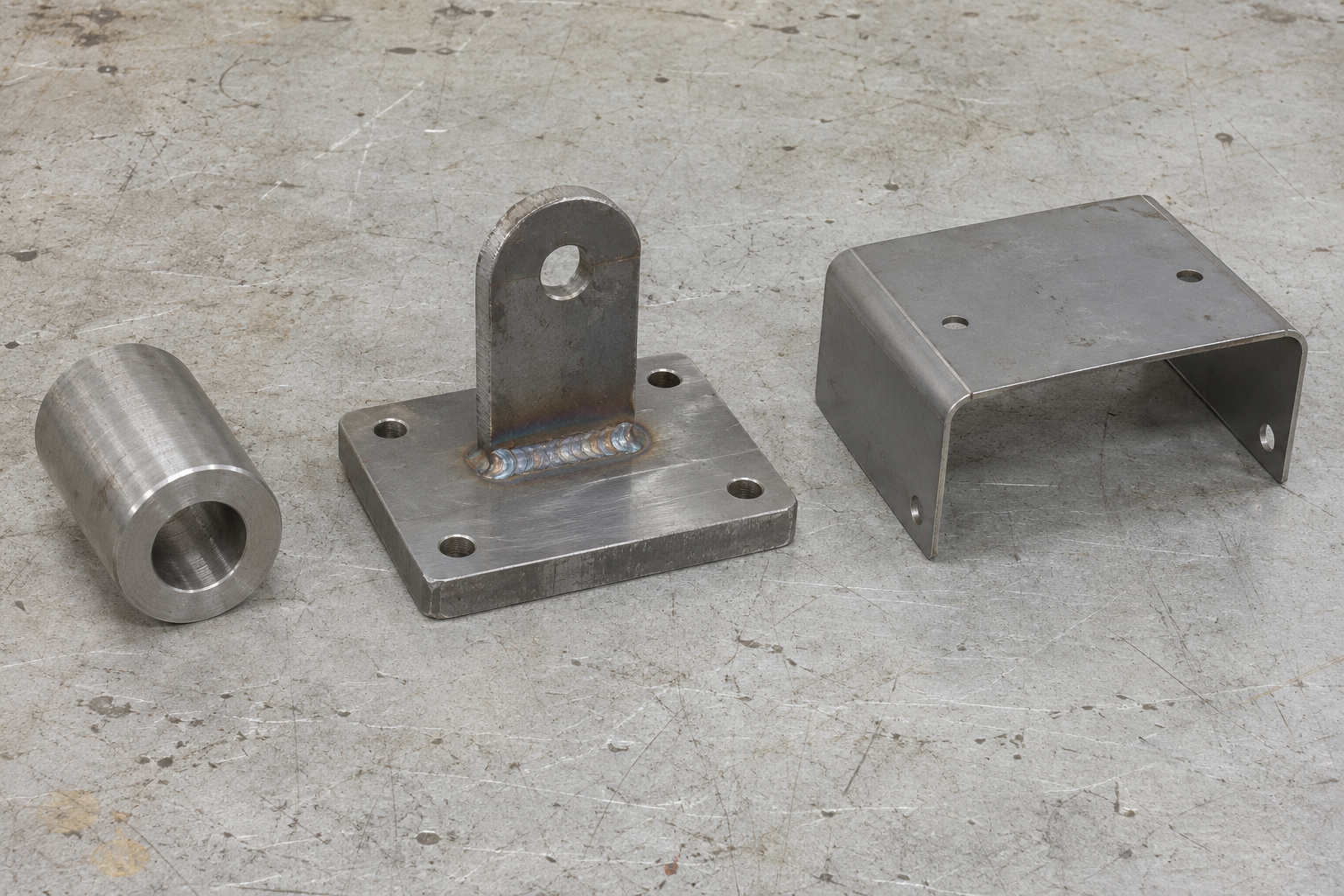
Mild steel is a common term for low-carbon steel used in machined parts, sheet metal components, and welded assemblies. It is widely used because it combines relatively low material cost with good weldability and formability. Typical applications include shafts, spacers, mounting brackets, machine bases, and enclosures. Bare mild steel can rust, so the operating environment should guide your choice of finish.
If your drawing says <strong>“MILD STEEL”</strong>, the next step is to confirm the grade and stock form. A turned spacer, a welded base plate, and a bent enclosure can all be made from mild steel, but each calls for different material and drawing requirements. <h2>Mild Steel Properties at a Glance</h2> <div> <div> <div> <table> <thead> <tr> <th>Harta benda</th> <th>What it means for your part</th> </tr> </thead> <tbody> <tr> <td><strong>Composition</strong></td> <td>Mild steel is primarily iron with a low carbon content. Use the applicable grade specification when you need exact composition limits.</td> </tr> <tr> <td><strong>Density</strong></td> <td>Approximately <strong>7.85 g/cm³</strong> atau <strong>7,850 kg/m³</strong>, a useful starting point for estimating part weight.</td> </tr> <tr> <td><strong>Strength and hardness</strong></td> <td>Values depend on the grade, product form, and supply condition. For load-bearing or wear-sensitive parts, specify the required properties and confirm them against the applicable specification.</td> </tr> <tr> <td><strong>Machinability</strong></td> <td>Common grades such as 1018 can be milled, turned, drilled, and tapped for general-purpose components.</td> </tr> <tr> <td><strong>Weldability and formability</strong></td> <td>Many low-carbon grades are suitable for welding or bending. Choose the sheet or plate specification for the operation and geometry you need.</td> </tr> <tr> <td><strong>Rintangan kakisan</strong></td> <td>Bare mild steel can rust when exposed to moisture. Specify a finish suited to the service environment.</td> </tr> </tbody> </table> </div> </div> </div> <h2>1018 vs. A36 vs. Cold-Rolled Sheet</h2> Start with the shape of the stock and how the part will be made. That usually narrows the choices faster than comparing generic strength figures for mild steel. <div> <div> <div> <table> <thead> <tr> <th>If you are making…</th> <th>A common starting point</th> <th>What to confirm before ordering</th> </tr> </thead> <tbody> <tr> <td><strong>A turned shaft, pin, or spacer</strong></td> <td><strong>1018 bar stock</strong> for general-purpose machining</td> <td>Bar size, supply condition, finished diameters, fits, and surface finish</td> </tr> <tr> <td><strong>A welded base plate or heavy mounting bracket</strong></td> <td><strong>ASTM A36 plate</strong> when the design calls for structural steel plate</td> <td>Plate thickness, required flatness, weld details, and surfaces to machine after welding</td> </tr> <tr> <td><strong>A bent cover, enclosure, or light bracket</strong></td> <td><strong>Cold-rolled low-carbon sheet</strong>, with the grade chosen for the part</td> <td>Sheet specification, thickness, bend geometry, visible surfaces, and coating</td> </tr> </tbody> </table> </div> </div> </div> 1018 and ASTM A36 describe material under different specifications. They may be candidates for some of the same applications, but a substitution should be checked against the required grade, product form, mechanical properties, and documentation before approval. “Cold-rolled” describes how the material was processed, so specify the sheet grade or standard as well when it matters to the design. <h2>Three Examples of How to Specify Mild Steel Parts</h2> <h3>CNC-turned spacer with a tight bore</h3> For a general-purpose spacer made from bar, <strong>1018 is a practical starting point</strong>. Put the bore tolerance, overall length, and any critical face or diameter requirements on the drawing. If the spacer will be zinc plated, state whether the bore and mating dimensions must meet tolerance after plating. That gives the shop enough information to account for the finish before machining. <h3>Welded base plate with a machined mounting face</h3> For a base plate that also serves as a mounting reference, the drawing should identify the <strong>finished mounting face</strong> and the flatness it must meet. If that face needs machining after welding, state the requirement explicitly. It affects how the shop plans the welding and machining sequence and how it quotes the job. <h3>Laser-cut and bent enclosure</h3> For a bent enclosure, specify the <strong>sheet grade or standard, thickness, inside bend radius, and finish</strong>. Flag any critical holes close to a bend and identify the visible faces. If a coated panel must make electrical contact at a grounding point, mark that area for masking on the drawing. <h2>What Finish Should You Specify for Mild Steel?</h2> <strong>Zinc plating</strong> is a common option for small brackets, fasteners, and machined parts that need corrosion protection. <strong>Powder coating</strong> is often used for enclosures, panels, and frames where appearance and coverage matter. For either finish, flag threads, mating faces, and other features that need masking or must meet tolerance after finishing. Include the coating specification or thickness when the design requires it. <h2>Can You Get a Quote if the Drawing Only Says “MILD STEEL”?</h2> Yes. If the exact grade is open, say so in the RFQ and ask the supplier to identify the proposed grade, standard, and supply condition in the quote. If the grade is mandatory, put it on the drawing or purchase order. If an alternative is proposed, review and approve it in writing before production.
<strong>Copy this checklist into your RFQ:</strong> <ul> <li>Part drawing and STEP file, if available</li> <li>Quantity and intended use</li> <li>Required grade and standard, or permission to propose a grade</li> <li>Stock form, thickness, or material condition, if specified</li> <li>Critical dimensions, fits, and tolerances</li> <li>Required surface finish or coating, including masking areas</li> <li>Material test report or traceability requirements, if applicable</li> </ul> <h2>Soalan Lazim</h2> <strong>Is mild steel the same as carbon steel?</strong> Mild steel is a type of low-carbon steel. Carbon steel is a broader category that also includes medium- and high-carbon steels. If you need a specific level of strength, hardness, or weldability, use the exact material grade on the drawing.
<strong>Can mild steel rust indoors?</strong> Yes. Condensation and repeated moisture exposure can cause bare mild steel to rust indoors. Consider the actual exposure when choosing a finish, especially for parts used near washdown areas, doors, or unconditioned spaces.
<strong>Can I substitute a local grade for 1018 or A36?</strong> A local grade can be considered if the drawing and purchase requirements allow it. Ask for the proposed grade and standard, then check the product form, supply condition, required properties, and documentation before approving the change. <h2>Get a Quote for Your Mild Steel Parts</h2> Have a drawing for a machined component, bracket, or sheet metal assembly? Send Witcool your drawing, quantity, and finish requirements. If the drawing only says <strong>“MILD STEEL,”</strong> tell us how the part will be used and whether the grade is open for review.
<strong>Send Us Your Drawing</strong> · <ahttps://wit.cool/cnc-machining/?utm_source=chatgpt.com">CNC Machining Services</a>



 EN
 VN
 DE
 KO
 JA
 FR
 ES
 ZH
 MS
 TH